Readable Hierarchy
Kadwa for hand-drawn titles, SF Pro for body text. Bold subheadings maintain hierarchy. 16px minimum body size for accessibility.
This project translates a focused research topic into an interactive data-visual storytelling experience. I chose the Tūī as the subject and designed a narrative prototype for audiences aged 5+, combining infographics, clear navigation, and multimodal interaction to teach natural science concepts quickly and memorably.
The work explores how data can become more readable and emotionally engaging when embedded in a child-led story structure, grounded in observation, accurate references, and iterative prototyping.
Background
I grew up in a city of concrete, fascinated by nature and wildlife. In New Zealand, birds live close to people, making nature feel approachable. The Tūī stands out with its striking plumage, diverse calls, and distinctive white throat tuft. This project lets me create an interactive Tūī experience for children aged five and above, while sharing creativity with my daughter.
Problem
Solution
I designed an interactive storybook that frames learning through a young girl's perspective — a curiosity-driven narrative that guides users scene by scene — while using infographic visuals to anchor key facts (scale, time, proportions, and sound wave forms).
The experience relies on , combines short text with clear visuals, and integrates sound and animation as sensory cues that support comprehension rather than distract from it.
Outcome
The final deliverable is a high-fidelity interactive prototype in Figma, taking the Tūī lifecycle from birdsong to discovery, through each life stage via tools like a telescope and magnifier, to a dreamlike "garden to sky" closure.
Feedback
The instructor feedback emphasised that this project exceeded assignment expectations through an ambitious, evidence-led process — resulting in an immersive infographic storybook where illustration, interaction, and sound work together to guide learning.
“The infographic experience was described as immersive, with storybook illustrations and interaction patterns reinforcing engagement.”
“Went far beyond expected scope for the assignment. Exploration was notably thorough and creative.”
“Strong iterative process extending past desk research — citing Te Papa inspiration, in-person Tūī observation, and children's book research as key drivers.”
Process
I began with a short survey to set direction and shape an initial problem frame, then grounded the content through observation, museum reference, and research into Tūī biology, sound, predators, and cultural context. I sketched and built three contrasting lo-fi narrative prototypes and ran comparative before delivering a polished with motion and sound.
Research
I started with a short survey (11 responses) to understand baseline knowledge and preferred learning styles. Results showed people recognise Tūī but know little about its lifecycle, and strongly prefer story-led and interactive learning with links to cultural meaning. I used these signals to draft an initial problem frame, then grounded the content through field observation and secondary research.
Observation
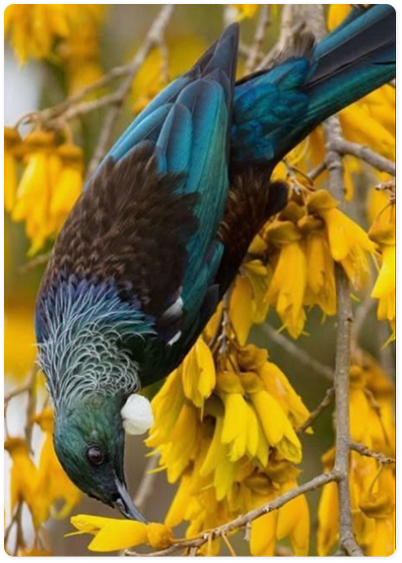
I recorded a kōwhai tree frequented by tūī and captured walk-by photos and clips to inform accurate food and activity scenes in the hi-fi prototype.
Field Survey
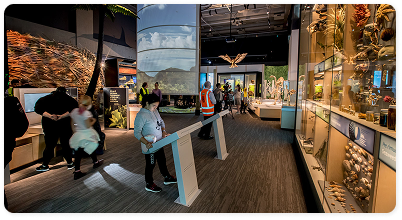
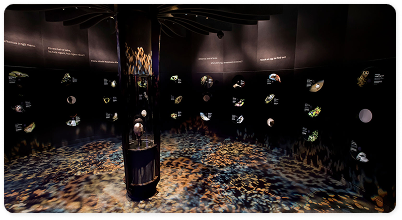
Te Papa Museum showcases many native New Zealand species with different types of interactions, both physical and digital.
Information
I mainly used research on New Zealand's native species to decide which one to feature, then studied the chosen bird in detail to understand its appearance, habits, and cultural links with Māori.
Visualisation
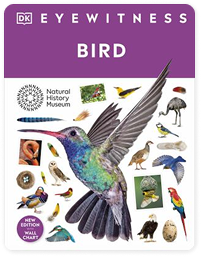
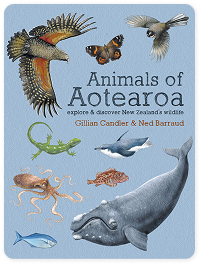
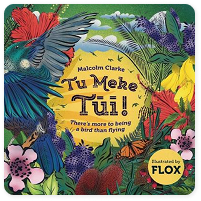
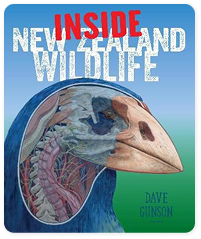
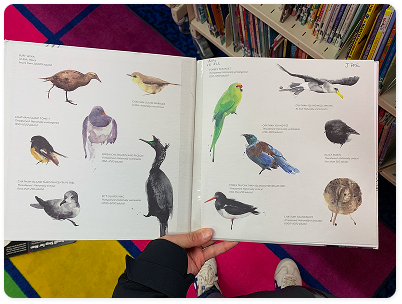
I explored Pinterest and children's books to study narrative logic, visual style, and colour use in kids' literature. This helped guide the storytelling and visual design aspects of the project.
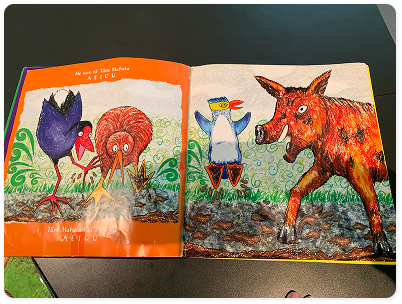
Design
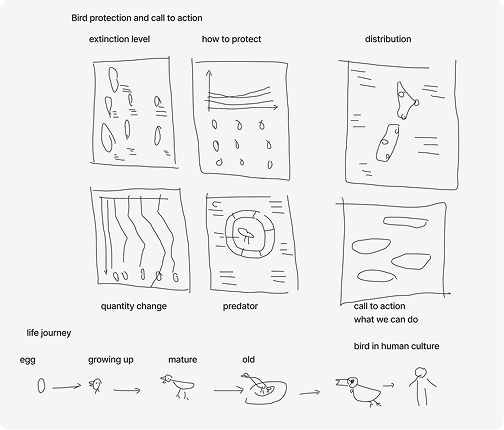
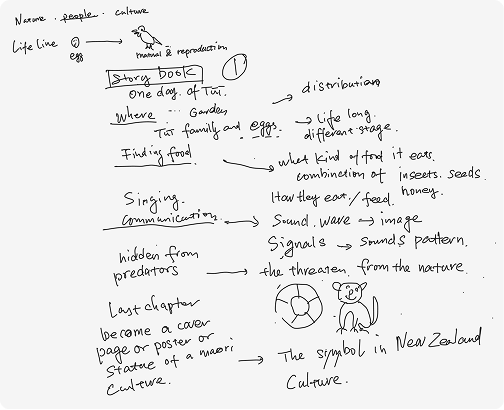
I translated early framing into sketches and three lo-fi narrative prototypes (child story, timeline, learning-metaphor) and ran a 5-participant comparative usability test to evaluate clarity, navigation, engagement, interaction understanding, and cultural comprehension. Testing confirmed that story framing and progressive discovery increase engagement, but success depends on explicit navigation and clear labels.
Design Principles
I merged the best elements into one cohesive experience and tightened the journey, IA, and key flows. In parallel, I established a lightweight visual system — type hierarchy for readability, a palette inspired by the Tūī and its habitat, simple icons, and -aware choices — then deepened the hi-fi across story, navigation, illustration consistency, interaction clarity, and data-vis cues.
Kadwa for hand-drawn titles, SF Pro for body text. Bold subheadings maintain hierarchy. 16px minimum body size for accessibility.
Deep greens from Tūī feathers and forest, orange-yellow for crown highlights and kōwhai flowers, blue for wings and sky.
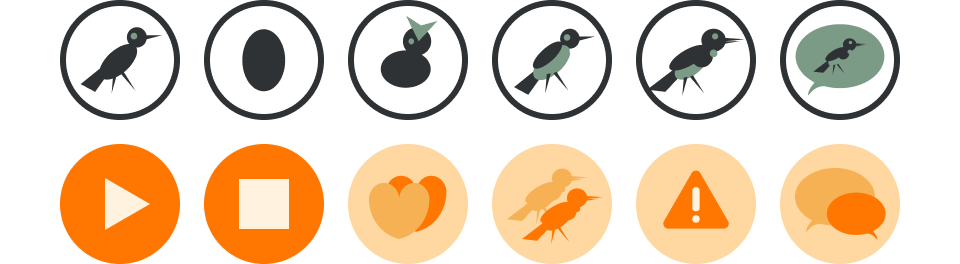
Icons use minimal shapes aligned to lifecycle stages and navigation affordances, recognisable at small sizes for young audiences.
Outline-and-fill and layered colour techniques, unified through consistent linework across predators, birds, and environments.
Colour changes, hover enlargement, and subtle animations guide users toward navigation, calls-to-action, and audio playback.
Colour tone variations and text sizes meeting WCAG , with a minimum body size of 16px throughout the experience.
Design System
Kadwa for hand-drawn titles, SF Pro for body text. Bold subheadings maintain hierarchy across the storybook.
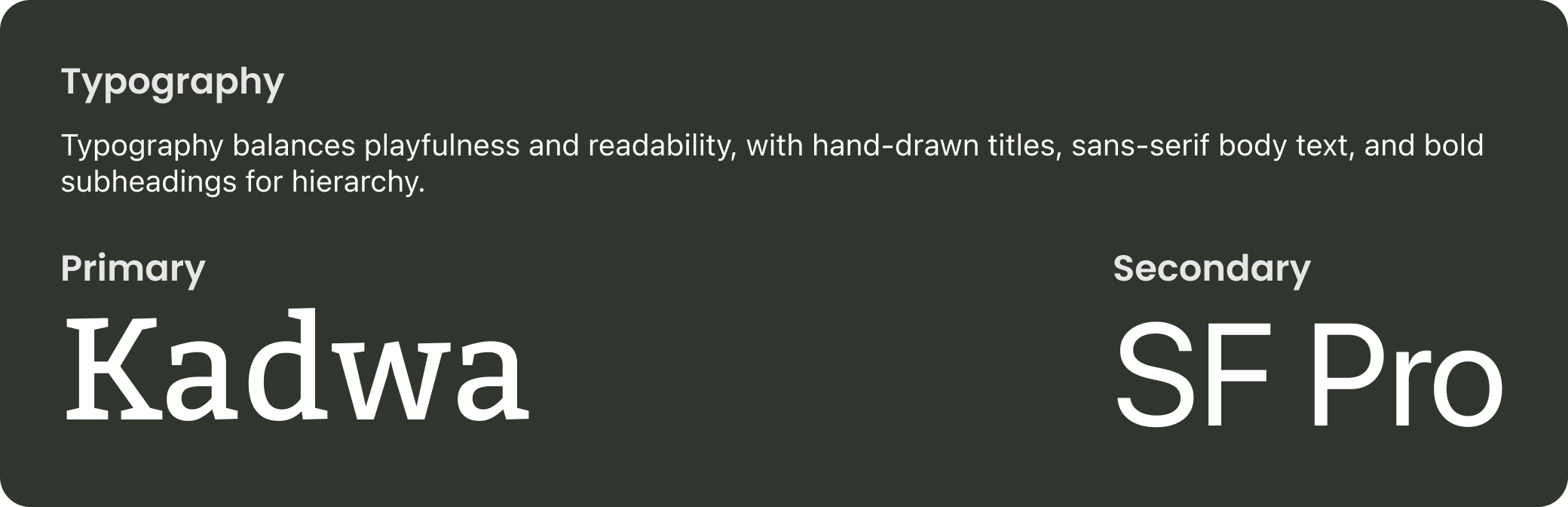
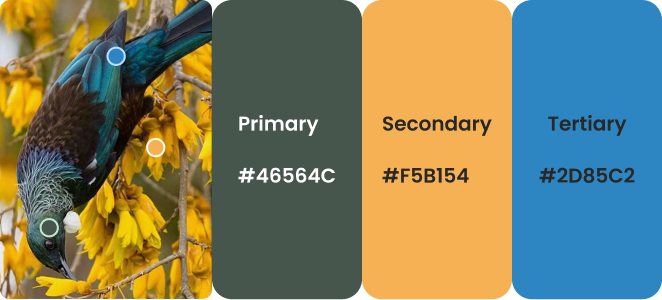
Deep greens from Tūī feathers and forest, orange-yellow for crown highlights and kōwhai flowers, blue for wings and sky. Greys maintain tone and legibility.
Icons use minimal shapes aligned to lifecycle stages and navigation affordances, immediately recognisable at small sizes for young audiences.
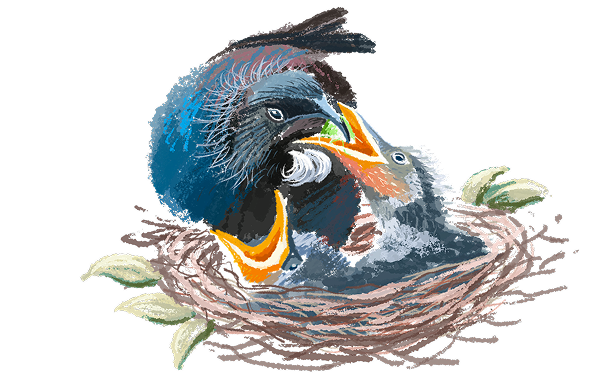
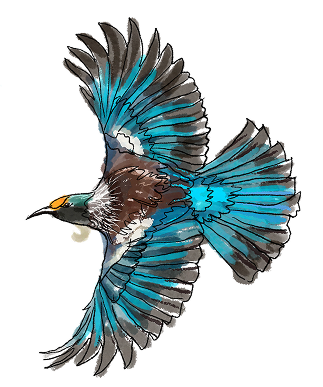
I selected a hand-drawn style using both outline-and-fill and layered colour techniques, unified through consistent linework to maintain visual coherence across predators, birds, and environments.
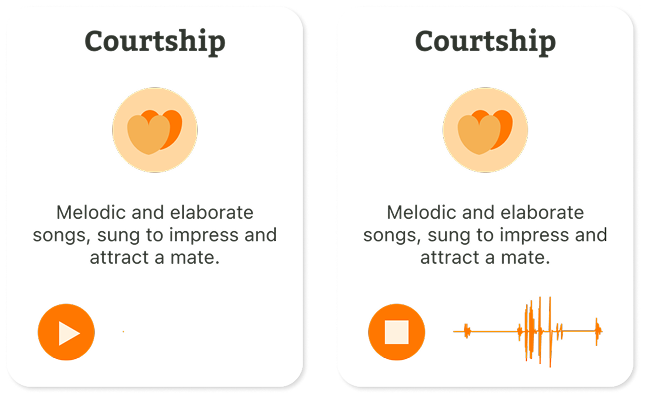
Interactive elements include buttons for navigation, calls-to-action, and audio playback. Affordances such as colour changes, hover enlargement, and subtle animations guide users toward interaction.
Validation
Three contrasting low-fidelity narrative prototypes went into a comparative usability test, evaluating clarity, navigation, engagement, interaction understanding, and cultural comprehension.
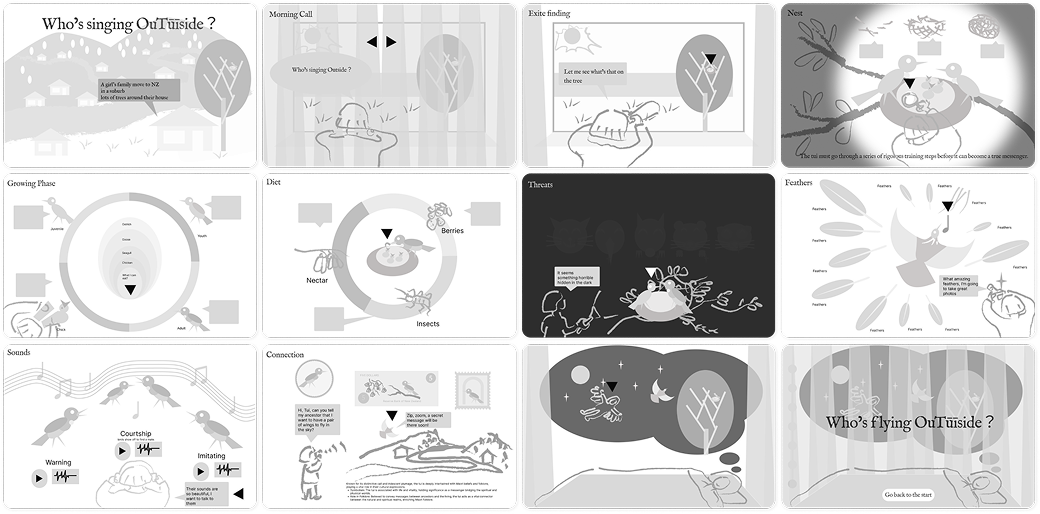
A story told through a young girl's curiosity. Story-driven narratives increased engagement and relatability, and progressive discovery supported learning, but navigation cues still needed to be clearer.
A timeline of the bird's own life stages. The structure felt efficient but less personally engaging than the child perspective, confirming that timeline clarity alone was not enough.
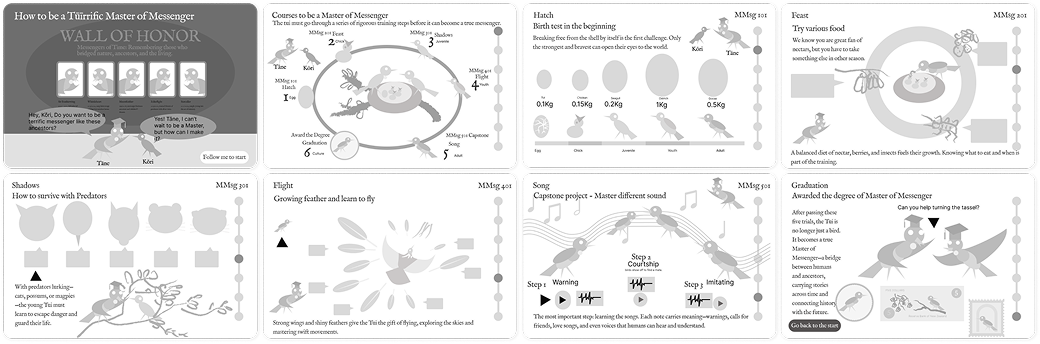
A journey to earn a "Master of Messenger Studies," framing stages as courses and predators as card-flipping tasks. Interactive exploration was popular, but predator and cultural content needed stronger explanation.
Testing showed no single prototype won outright: story-led framing drove engagement, timeline structure gave efficiency, and the learning framing's interactions were enjoyable but under-explained. This is why the final design became a hybrid — the child-led story spine, explicit forward/back navigation, and clearly labelled interactions with concise anchoring text, revealing cultural and ecological context progressively rather than all at once.
Delivery
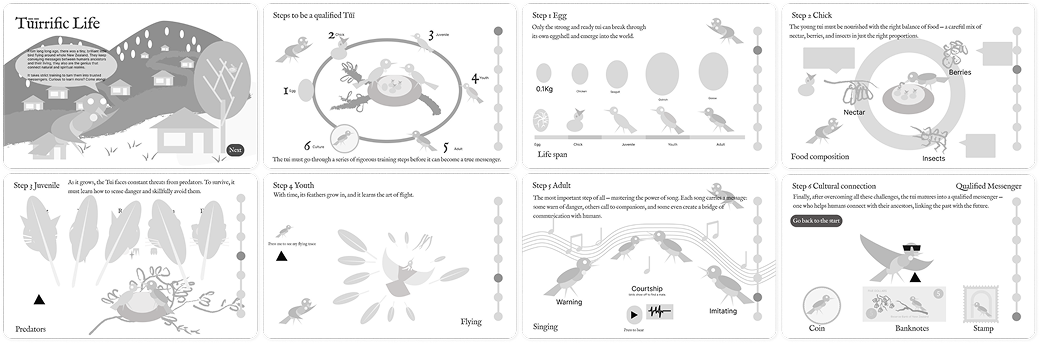
The final hi-fi experience commits to the child-led narrative: the story begins with hearing the call, opening a curtain, and discovering the Tūī, then uses a light sidebar and tool metaphors to guide learning. Data visuals support measurable facts, while animations and audio cues heighten immersion.
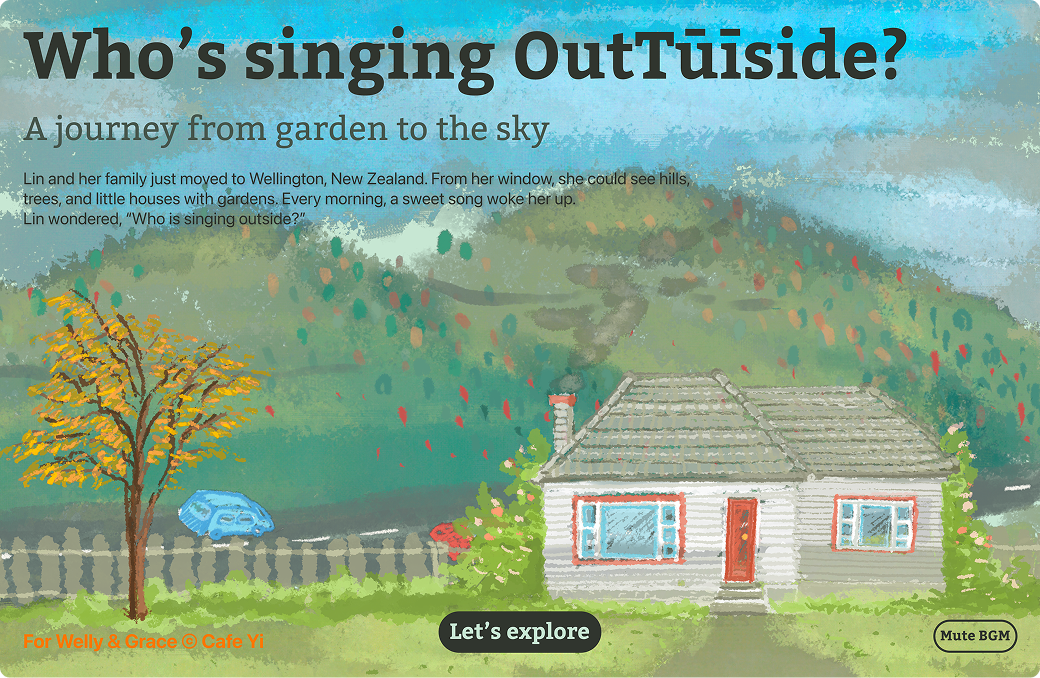
Cover
The story opens with a hand-painted scene and an invitation to explore. Lin has just moved to Wellington — each morning, a sweet unfamiliar song wakes her up.
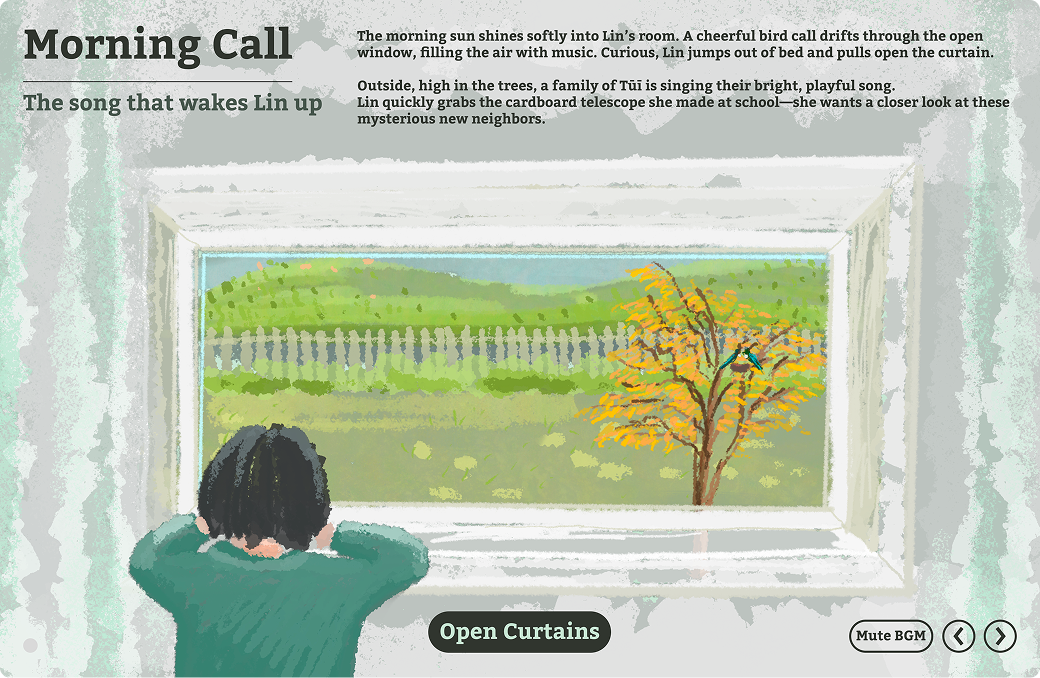
Morning Call
Lin wakes to a cheerful birdsong, opens the curtains, spots a singing Tūī family in the trees, and grabs her cardboard telescope to look closer.
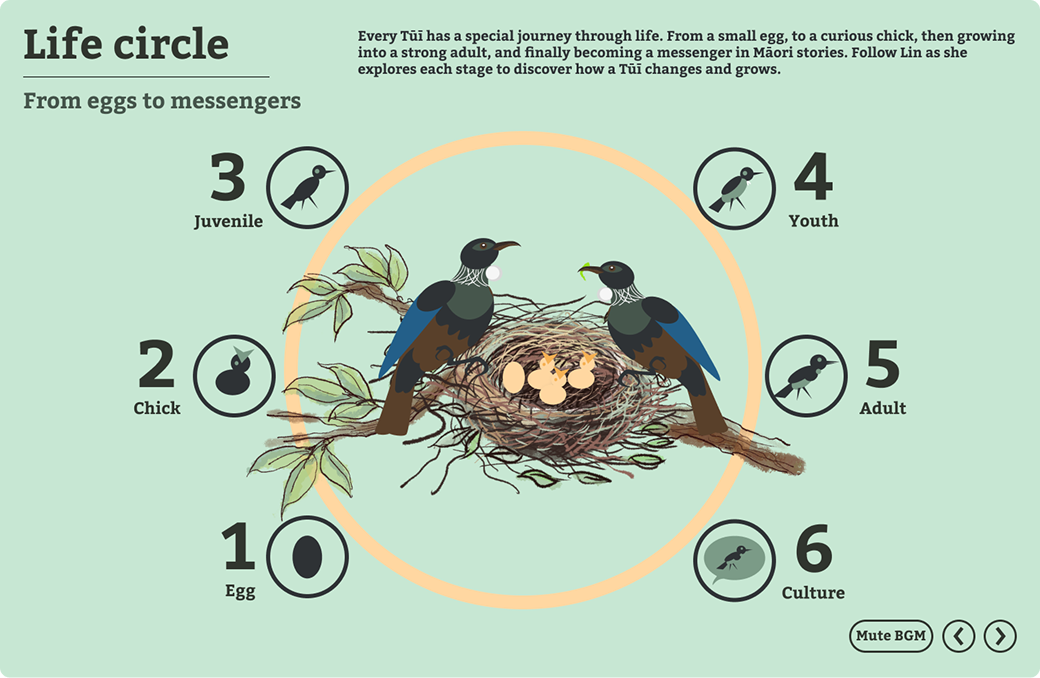
Life Circle
A stage menu guides learners through the Tūī lifecycle from egg to adult to cultural messenger. Follow Lin as she explores each stage to discover how a Tūī changes and grows.
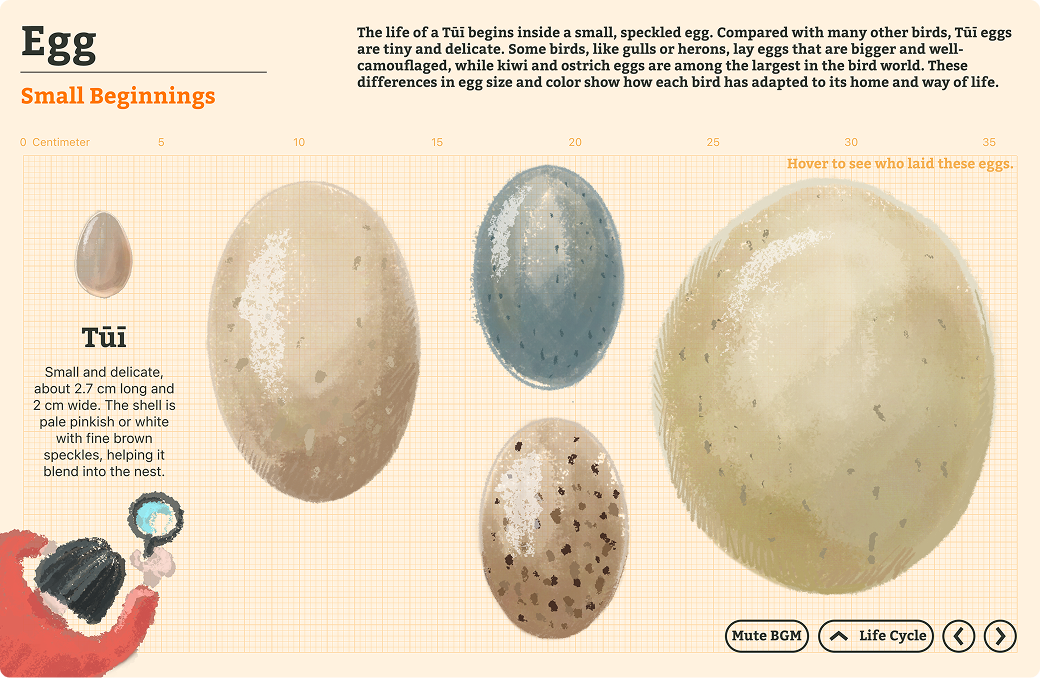
Egg · Small Beginnings
Size comparison data visualisation anchors the lifecycle's starting point — compared with many other birds, Tūī eggs are tiny and delicate.
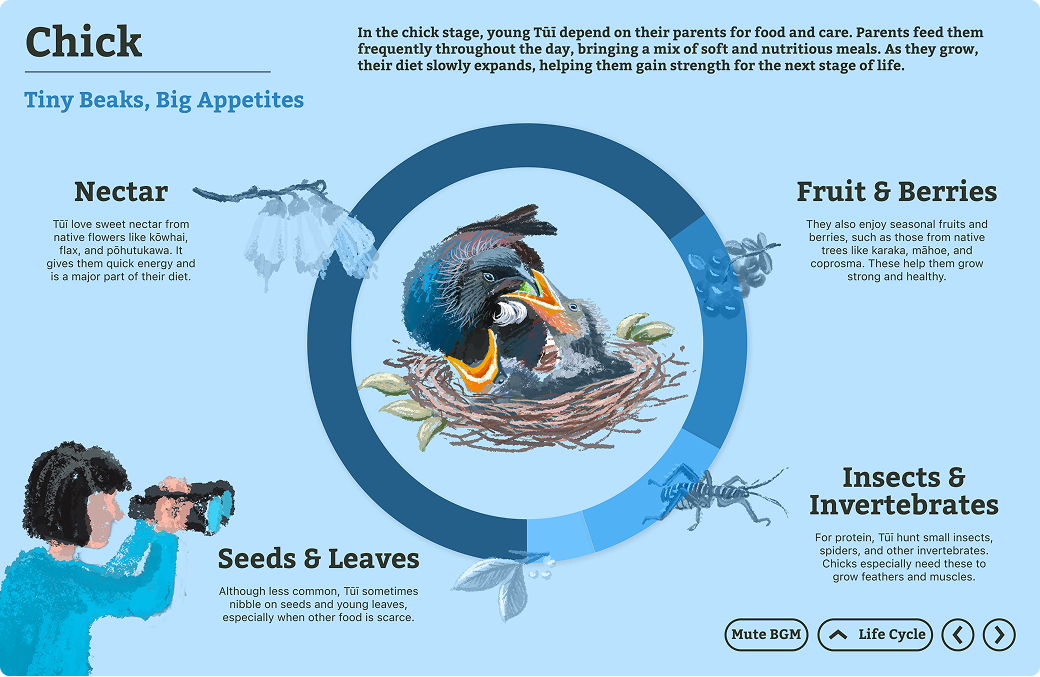
Chick · Tiny Beaks, Big Appetites
Diet proportion data introduces the Tūī's early life. Parents feed them frequently throughout the day, bringing a mix of soft and nutritious meals.
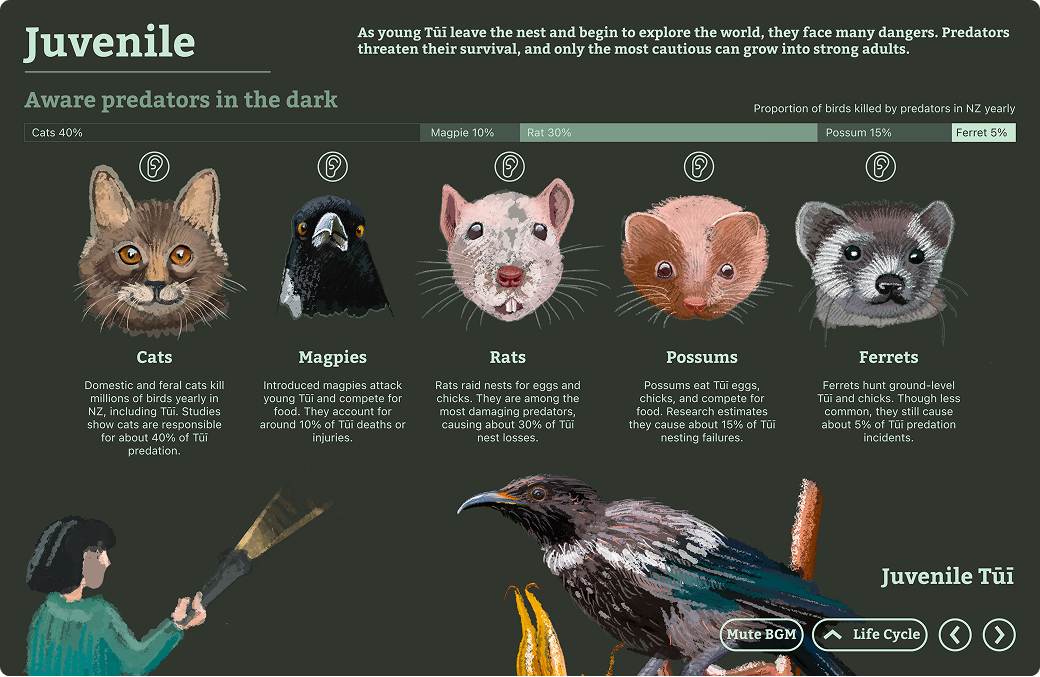
Juvenile · Aware Predators in the Dark
Predator proportion data explains what threatens young Tūī survival. Only the most cautious ones grow into strong adults.
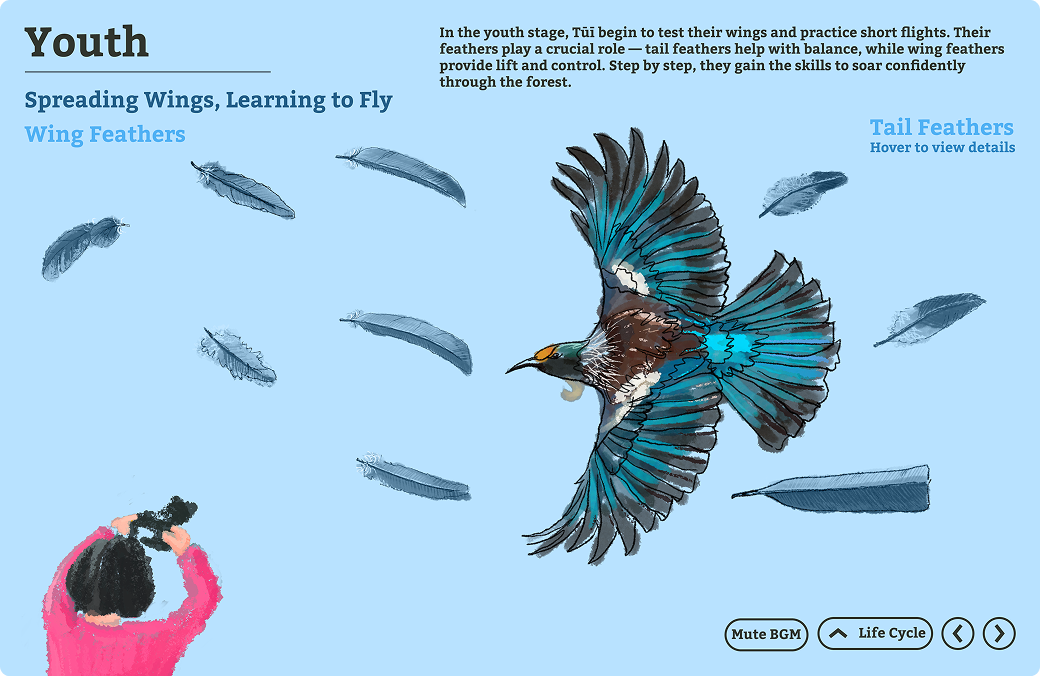
Youth · Spreading Wings, Learning to Fly
Interactive feather labels explain how tail and wing feathers enable flight. Tail feathers help with balance, while wing feathers provide lift and control.
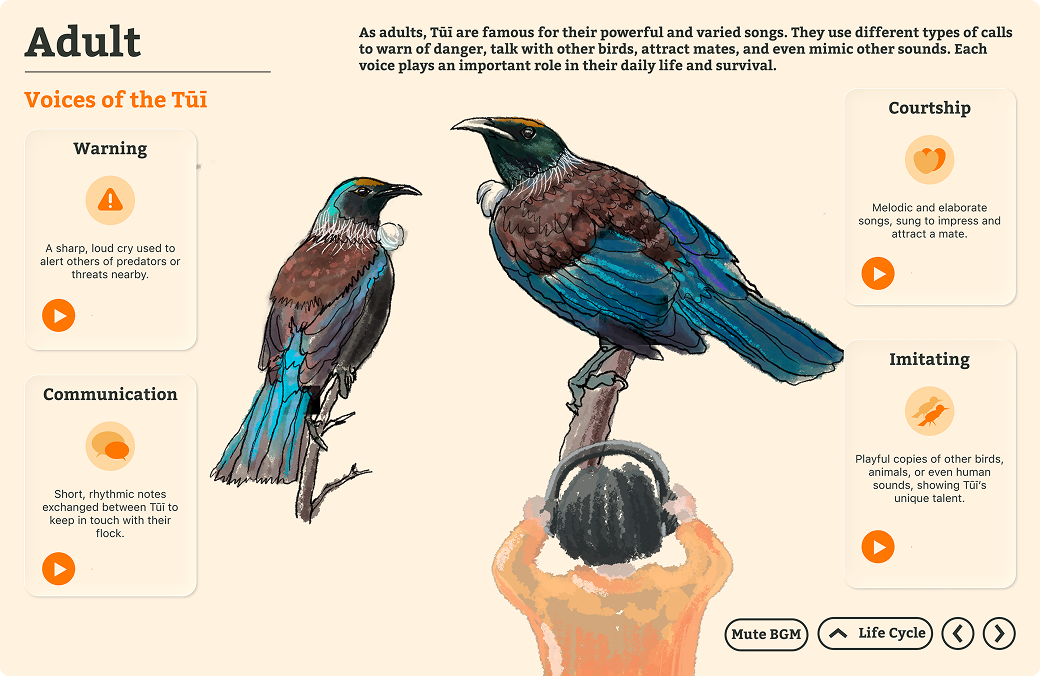
Adult · Voices of the Tūī
Sound wave visualisation and audio playback bring the Tūī's diverse calls to life across courtship, mimicry, warning, and everyday communication.
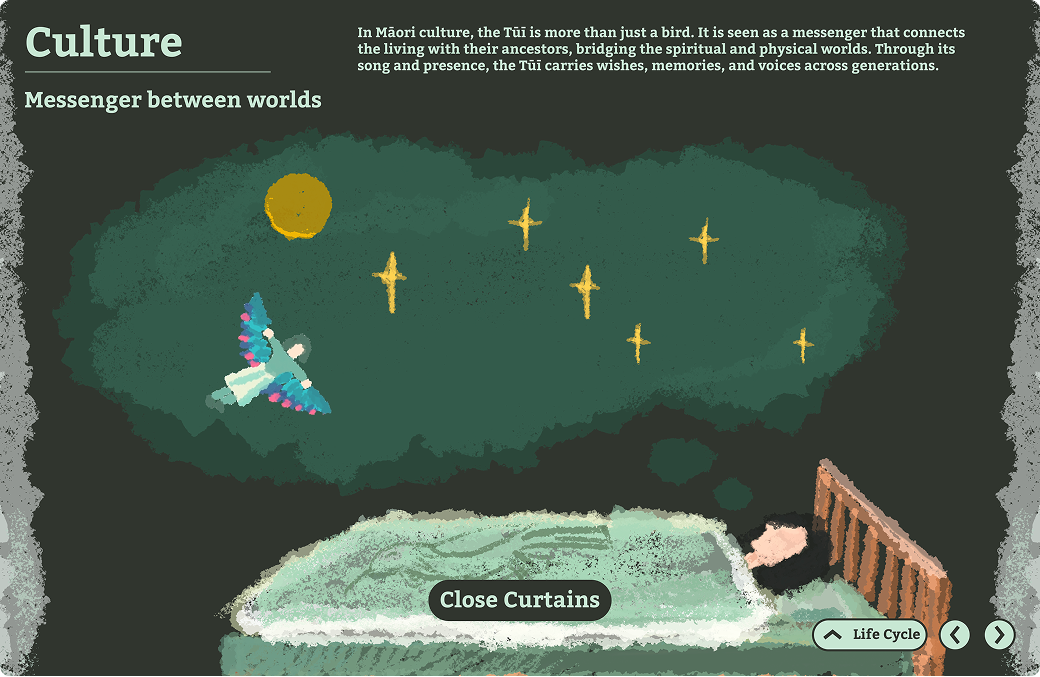
Culture · Messenger Between Worlds
Through its song and presence, the Tūī carries wishes, memories, and voices across generations — connecting the lifecycle to its wider cultural meaning.
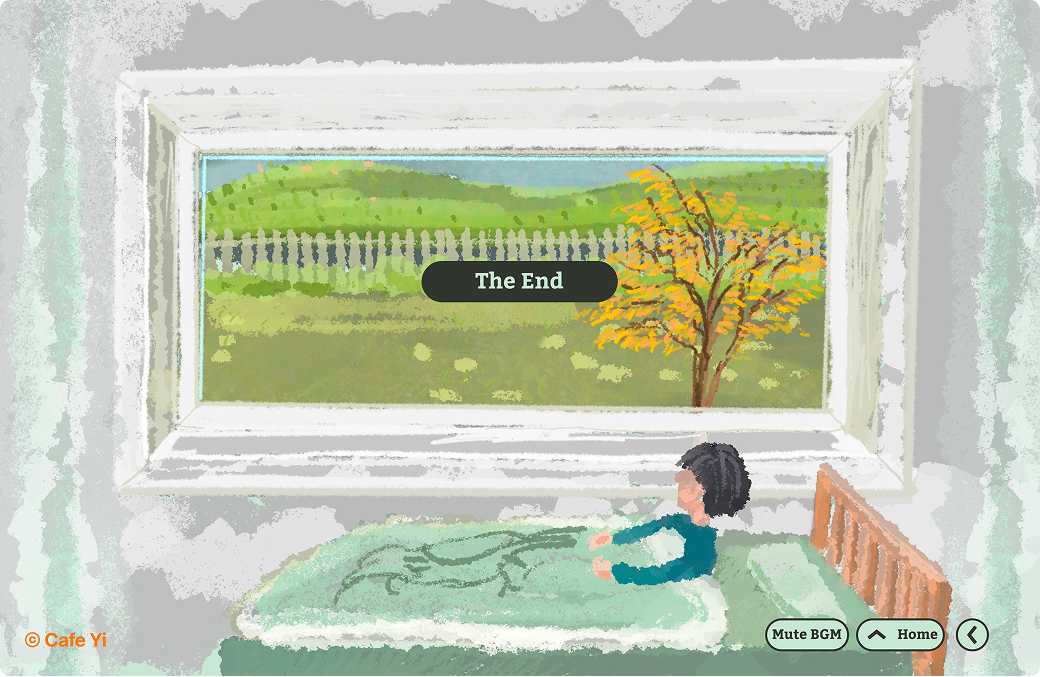
Dream · The End
A dreamlike ending reinforces memory and provides emotional closure, leaving Lin feeling inspired by her journey from garden to sky.
Reflection
This project demonstrated that narrative framing can dramatically change comprehension and motivation. Embedding data within a child-led story structure made scientific information more readable, emotionally resonant, and memorable than a conventional infographic format.
Ambiguity in labels — especially around predators and cultural symbolism — quickly erodes clarity. Future iterations would invest more in microcopy, contextual hints, and controllable audio. Hybridising prototypes by borrowing strengths was the most productive design move of the project.
Further usability testing on story readability, interaction effectiveness, and navigation clarity. Expand content into regional distribution, population trends, and conservation status. Explore a more continuous "one-shot" immersive narrative, potentially adding video or interactive 3D models.
Primary recipe R16 · Why First Data Story
This project uses R16 because every design decision prioritised emotional and narrative meaning before presenting raw data. The birdsong hook, the child-led story perspective, and the dreamlike ending all establish meaning first — so when lifecycle facts appear, learners already have a reason to care about them.
Secondary recipe
Related Projects
 Service Systems
Accessibility Support Hub
A support pathway case focused on clearer access to court assistance.
Service Systems
Accessibility Support Hub
A support pathway case focused on clearer access to court assistance.
 Service Systems
Voting Starter Kit
A civic service case focused on motivation and action.
Service Systems
Voting Starter Kit
A civic service case focused on motivation and action.
 Digital Systems
New World Design System
A design system case focused on reusable UI structure.
Digital Systems
New World Design System
A design system case focused on reusable UI structure.
 Digital Systems
ReKraft
A sustainability product design case combining Te Ao Māori values.
Digital Systems
ReKraft
A sustainability product design case combining Te Ao Māori values.